Choosing the right motor begins with one practical question: what size roller shutter motor do i need? The answer depends on more than the shutter’s width. Curtain weight, barrel diameter, slat material, installation height, and daily operating frequency all affect the required torque.
Roller-shutter engineer Daniel Mercer explains, “Motor selection should match the curtain load, tube size, and duty cycle, not simply the window dimensions.” This advice reflects a common installation problem. A wide aluminium shutter may need less torque than a narrow steel shutter. The difference can be surprisingly large.
Measure carefully. Record the shutter width and height, then estimate the curtain’s total weight. Add the bottom rail, locking components, and any unusual resistance. Check the barrel diameter, because a larger tube can increase the lifting load. Manufacturers usually provide torque charts for specific shutter profiles. Use those charts instead of guessing.
A small safety margin matters.
However, more power is not always better. An oversized motor may cost more, create harsher movement, and place unnecessary stress on the shutter system. An undersized motor may stop halfway, overheat, or fail during cold weather. I have seen measurements appear correct, yet the chosen motor still perform poorly because friction was ignored.
This guide compares seven roller shutter motors by torque, voltage, limit control, noise, protection rating, and intended use. It also highlights the details that product listings often hide. Before buying, confirm the manufacturer’s specifications with a qualified installer. Real conditions can change the calculation.
Roller Shutter Motor Basics: Types, Features, and Operating Methods
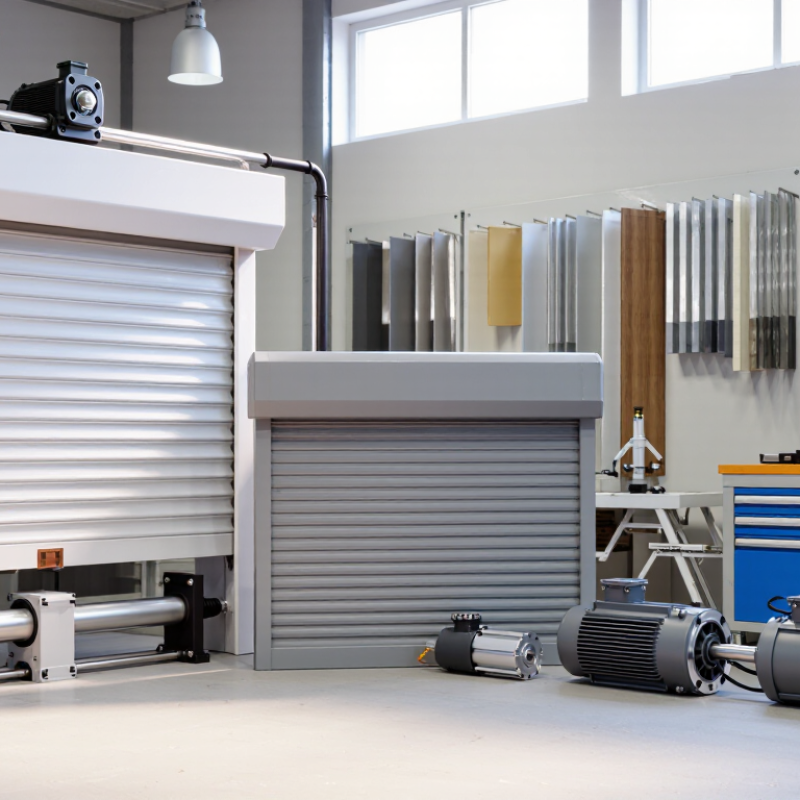
A roller shutter motor is more than a lifting device. Its type affects noise, speed, access, and service life. Tubular motors fit inside the shutter tube and suit many residential openings. External motors provide higher lifting capacity for wider or heavier curtains. Inline systems can save space, but installation may be less forgiving. Each option has trade-offs.
Operating methods range from a wall switch to remote control or a smart controller. A manual override is valuable during power failures. Look for adjustable upper and lower limits, thermal protection, and reliable obstruction sensing. These features improve daily safety, but they cannot replace careful installation. Quiet operation matters in bedrooms. It matters less in warehouses.
Choosing the correct size requires more than measuring width. Check curtain weight, tube diameter, shutter height, friction, and expected duty cycle. Motor torque must match the load, with a sensible safety margin. A rough estimate can mislead when the curtain binds or the slats are damaged. Measure twice. Field installers often discover that a seemingly strong motor struggles because guides are misaligned. I once underestimated the effect of friction during a basic assessment; the result was slower movement and extra heat. Review the motor’s technical data, confirm electrical requirements, and have a qualified professional verify the final selection.
Roller Shutter Motor Sizing: Estimated Torque by Curtain Area
This chart provides a practical starting estimate for selecting a roller shutter motor.
It assumes a curtain mass of 6 kg/m², a 100 mm drum radius, and 80% mechanical efficiency.
Required torque is calculated as: Area × Curtain Mass × Gravity × Drum Radius ÷ Efficiency.
Actual motor selection should also consider friction, wind load, duty cycle, safety margins, and the shutter’s operating method.
How to Measure Your Roller Shutter for the Correct Motor Size
Choosing a roller shutter motor starts with accurate measurements, not guesswork. Measure the finished opening between the side guides, then measure from the sill to the top of the shutter box. Record the axle tube diameter and available box space. Measure the curtain itself if possible, including slat thickness and material. Do not measure only the window glass.
Estimate curtain weight by multiplying shutter area by its material weight per square metre. Then estimate torque with this simple formula:
curtain weight × tube radius
Add roughly 20% for friction, guide resistance, and starting load. This allowance is practical, but not universal. A dusty guide or slightly bent slat can demand more torque. I have seen small measurement errors create motor overheating.
Professional standards matter here. EN 13659 addresses performance requirements for external shutters, while EN 60335-2-97 covers safety for motor-operated shutters. Check the motor’s rated torque, lifting capacity, duty cycle, and limit-setting method against those requirements. The International Energy Agency’s Buildings report states that buildings use about 30% of global final energy, so correctly fitted shutters can support wider efficiency goals. Still, that figure does not determine motor size.
A motor may fit physically yet fail under daily use. Test the shutter’s movement manually before ordering. It should travel smoothly, without scraping or sudden resistance. When measurements seem borderline, choose verified calculations over a convenient guess.
Seven Best Roller Shutter Motors for Different Door Requirements
Seven Best Roller Shutter Motors for Different Door Requirements
Choosing the right roller shutter motor starts with the door, not the motor label. A compact tubular motor suits a small bedroom shutter with a light curtain. A standard tubular motor works well for average windows and domestic doors. Narrow-tube motors fit installations with limited side space. Measure the barrel diameter carefully. A few millimetres can change the correct option.
Heavy steel shutters need a high-torque tubular motor with suitable lifting capacity. Large shopfront shutters often require an external side motor, especially when the curtain is wide or unusually heavy. For warehouses, an industrial motor with a higher duty cycle handles repeated opening throughout the day. A motor with manual override is useful where staff need access during a power failure. It should still include reliable limits and obstruction protection.
Calculate curtain weight, barrel size, shutter height, and operating frequency before ordering. Torque requirements vary with friction, spring balance, and installation condition. Never size a motor from width alone. A quiet low-voltage motor may suit a home office, while a stronger mains-powered unit may suit a busy entrance. In site inspections, I have seen oversized motors damage curtains through harsh stopping. Undersized motors create heat and premature wear. I would leave a reasonable capacity margin, but not an excessive one. Local wiring and safety requirements also need confirmation by a qualified installer.
7 Best Roller Shutter Motors What Size Do I Need? — Seven Best Roller Shutter Motors for Different Door Requirements
| Motor Type |
Recommended Door Requirement |
Typical Door Size |
Rated Torque |
Typical Motor Speed |
Power Supply |
Limit Control |
Best Use |
| Compact Tubular Motor |
Small domestic roller shutter or window shutter with a lightweight curtain |
Up to 3.0 m wide
Up to 2.5 m high |
20–30 Nm |
12–17 rpm |
230 V AC, single phase |
Mechanical or electronic adjustable limits |
Best for light residential shutters where the available axle space is limited. |
| Standard Tubular Motor |
Medium-sized residential door with a steel or aluminium shutter curtain |
Up to 4.0 m wide
Up to 3.0 m high |
40–60 Nm |
12–17 rpm |
230 V AC, single phase |
Mechanical or electronic adjustable limits |
Best all-round option for common garage, patio and residential roller doors. |
| High-Torque Tubular Motor |
Wide residential or light-commercial door with a heavier curtain |
Up to 5.0 m wide
Up to 3.5 m high |
80–120 Nm |
8–14 rpm |
230 V AC, single phase |
Electronic limits with obstruction-compatible controls |
Best for wide shutters that require additional lifting force without using a large external motor. |
| Inline Chain-Drive Motor |
Large roller shutter or grille where direct tubular installation is unsuitable |
Up to 6.0 m wide
Up to 4.5 m high |
120–180 Nm |
6–12 rpm |
230 V AC, single phase |
Electromechanical or digital limit system |
Best for heavier commercial shutters and installations needing accessible side-mounted drive components. |
| Industrial Side-Mounted Operator |
Large, frequently used warehouse, loading-bay or industrial roller door |
Up to 7.0 m wide
Up to 6.0 m high |
180–300 Nm |
6–10 rpm |
230 V or 400 V AC, depending on configuration |
Digital or electromechanical limits |
Best for high-cycle commercial use where durability, braking and service access are priorities. |
| High-Speed Industrial Motor |
Commercial door requiring faster opening and closing between work areas |
Up to 6.0 m wide
Up to 5.0 m high |
100–250 Nm |
15–30 rpm |
230 V or 400 V AC, depending on configuration |
Digital limits with control-panel integration |
Best for warehouses and logistics areas where reducing door-open time improves traffic flow. |
| Battery-Backup Tubular Motor |
Residential or small commercial shutter that must operate during a power outage |
Up to 4.0 m wide
Up to 3.0 m high |
40–100 Nm |
8–17 rpm |
230 V AC with dedicated backup battery system |
Electronic limits with manual override or emergency release |
Best for emergency access in homes, shops and buildings where mains power may be interrupted. |
How to Compare Motor Power, Speed, Safety, and Smart Controls
Choosing among the seven best roller shutter motors starts with the curtain’s weight, width, and barrel diameter. Required torque is approximately load force multiplied by barrel radius. Measure carefully. A 20% safety margin is sensible, but oversized motors can increase noise and energy use.
Speed matters at windows facing busy streets. A slower motor gives gentler movement and less impact at the end stops. Faster models suit large openings, but they demand accurate limits and stronger installation points. Testing aligned with EN 13659 considers resistance, closing force, and safe operation. Never judge power from wattage alone. Torque, duty cycle, thermal protection, and manual override matter more.
Smart controls add convenience, not automatic safety. Use obstacle detection, wall switches, timers, and secure access credentials. NISTIR 8259 recommends unique device identity, protected updates, and data security for connected products. Those details are easy to overlook. The IEA’s Buildings report states that buildings use about 30% of global final energy, so scheduled operation can support wider efficiency goals. However, I would not promise major savings from shutters alone. Window orientation, insulation, weather, and user habits change the result. Test one opening first, record noise and travel time, then compare the remaining motors under identical conditions.
Installation, Maintenance, and Troubleshooting for Roller Shutter Motors
Choosing among the seven best roller shutter motors starts with the shutter, not the catalogue. Measure curtain weight, shaft diameter, shutter height, and required torque in newton-metres. A motor that is too weak overheats; an oversized motor can damage slats and end stops. The European Commission’s 2020 preparatory study on electric motors estimates that motors consume about 50% of European electricity. Efficiency matters, even for smaller shutter systems. Disconnect mains power before installation, secure the curtain, and set upper and lower limits gradually. I have learned that rushing limit adjustment often creates uneven winding.
Maintenance should include cleaning guides, checking fasteners, and inspecting the cable, tube, and emergency release every six months. Do not spray lubricant into the motor housing. Remove dust from the side channels instead. The U.S. Department of Energy’s motor-system guidance links poor alignment and excessive friction with avoidable energy losses. A scraping sound deserves attention. It is not normal. If the shutter stops midway, check for obstructions, thermal overload, loose wiring, or a depleted control battery. Let the motor cool before testing again.
Tips: Record the motor model, torque rating, installation date, and limit settings. Photograph the wiring before service. If the shutter moves unevenly, stop cycling it repeatedly. A technician should test insulation, earth continuity, and load current. My own weak point is assuming a quiet motor is healthy; hidden wear can develop behind smooth operation. Always compare the measured load with the manufacturer’s technical sheet and local electrical requirements.
FAQS
A compact tubular motor usually fits light curtains and limited spaces. It sits inside the shutter tube. Quiet operation helps in bedrooms. Measure the tube diameter carefully.
An external motor suits wide or heavy shutters with higher lifting demands. It often works well for large entrances and shopfronts. Check available side space before installation. Space can disappear quickly.
Check curtain weight, shaft diameter, shutter height, friction, and operating frequency. Width alone gives an unreliable estimate. Match torque to the real load. Leave a sensible capacity margin, not an excessive one.
Misaligned guides, damaged slats, or excessive friction can slow movement. The motor may overheat despite having strong torque. I once underestimated friction during an assessment. The result was slower travel and extra heat.
Adjustable upper and lower limits help control stopping positions. Obstruction sensing can reduce damage during blockage. Thermal protection helps prevent overheating. Manual override remains useful during power failures.
Disconnect mains power and secure the curtain before work begins. Confirm electrical requirements and motor torque. Set travel limits gradually. Rushing this step can cause uneven winding.
Clean side guides and inspect fasteners every six months. Check the cable, tube, and emergency release. Remove dust from channels. Do not spray lubricant into the motor housing.
Check for obstructions, loose wiring, thermal overload, or a depleted control battery. Let the motor cool before testing again. A scraping sound needs attention. It is not normal.
Contact a technician when movement becomes uneven, noisy, or unusually slow. Repeated cycling may worsen hidden damage. The technician should test insulation, earth continuity, and load current. Smooth operation is not proof of good health.
Conclusion
Choosing the right roller shutter motor begins with understanding the main types, including tubular, side-mounted, and integrated systems, along with their operating methods and key features. To determine what size roller shutter motor do i need, measure the shutter’s width, height, curtain weight, and mounting arrangement. These details help match the motor’s lifting capacity and torque to the door’s actual requirements, preventing poor performance or unnecessary strain.
This guide reviews seven roller shutter motor options for different door sizes, weights, usage levels, and installation conditions. It also explains how to compare motor power, opening speed, braking performance, emergency operation, safety protection, and smart control compatibility. Clear advice on installation, routine maintenance, limit adjustment, unusual noise, overheating, and common operating faults helps ensure reliable performance. Whether the shutter is used occasionally or throughout the day, selecting a properly rated motor and maintaining it correctly can improve safety, convenience, durability, and energy efficiency.

 Torsion Motor