A shutter motor may look compact, yet it controls daily security, comfort, and energy use. Before comparing prices, buyers should understand how to evaluate shutter motor quality before purchasing. The International Energy Agency reports that electric motor-driven systems consume nearly half of global electricity. Even a small motor deserves serious attention.
The U.S. Department of Energy also identifies motor systems as a major industrial energy-saving opportunity. For shutter applications, efficiency is only one part of the decision. Check rated load, duty cycle, noise level, thermal protection, ingress protection, and emergency operation. A strong motor should lift the curtain smoothly, stop accurately, and avoid overheating after repeated cycles. Look for documented testing, traceable specifications, and compliance with relevant IEC standards, including IEC 60034 principles where applicable. Marketing language is not proof.
Energy-efficiency expert Amory Lovins has said, “The cheapest energy is the energy you don’t use.” That principle applies to standby consumption and poor installation. Ask whether the supplier provides measured noise data, cycle-life results, warranty terms, and replacement-part support. Inspect the gearbox, cable seals, mounting brackets, and control interface. Small details reveal manufacturing discipline. Not every expensive motor is better. Not every quiet motor is durable. A practical comparison should combine laboratory evidence with installation experience, because real shutters face dust, cold mornings, uneven loads, and impatient users. This guide examines seven reliable ways to judge quality before purchase, while recognizing one uncomfortable truth: specifications can still hide weaknesses.
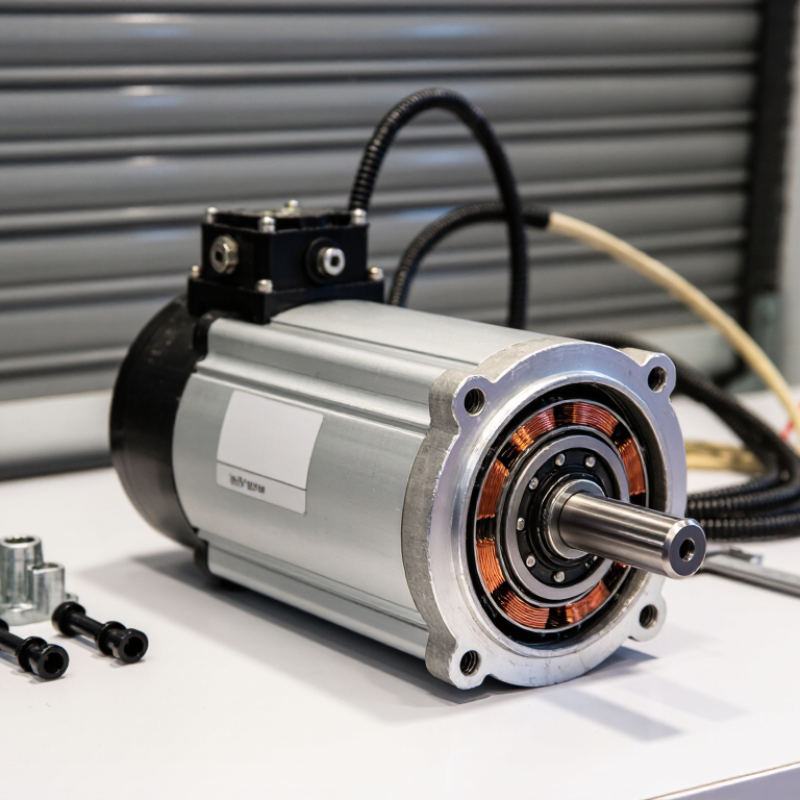
A quality shutter motor starts with measured duty, not packaging claims. Measure the curtain’s weight, drum radius, travel speed, and friction. For vertical shutters, estimate torque with T = F × r, where F is the lifting force and r is the drum radius. Add the curtain’s friction and a practical safety margin. Torque capacity is not the same as load capacity. A motor may lift a light curtain slowly but stall under repeated cycles. Power follows P = T × ω, so faster movement usually requires more power.
The International Energy Agency reports that electric motor systems consume roughly half of global electricity. Efficiency and heat control therefore deserve attention, even in small shutter assemblies.
Check the motor’s rated torque, maximum curtain weight, duty cycle, and thermal protection. IEC 60034-1 provides widely used guidance for motor ratings, but not every shutter motor fits its testing scope. Do not compare efficiency labels blindly. Confirm the test conditions.
In field inspections, I would also listen for gearbox noise and check whether the tube twists during stopping. That simple test can reveal weak torque control. I once trusted a generous load figure without checking the drum radius. It was a poor assumption.
Tips: Calculate the real load first. Test the motor with the curtain installed, not only on a workbench. Choose at least 20% reserve capacity when friction, wind, or frequent cycling is expected. The margin may need adjustment. Always verify the final selection against the manufacturer’s technical sheet and installation conditions.
When evaluating a shutter motor, start with materials, not packaging or polished claims. Copper windings usually handle heat better than low-grade conductive substitutes. Steel gears should feel accurately machined, with even teeth and minimal side play. A sealed bearing reduces friction at the shaft. However, heavier metal does not automatically mean better quality. I once trusted a dense housing that concealed weak internal tolerances. That mistake was expensive.
Check the motor’s construction with the shutter fully assembled, if possible. The tube should sit straight without rattling during repeated opening and closing cycles. Listen for grinding, uneven humming, or sudden pitch changes. Ask how the thermal protector works and whether limit settings remain stable after many cycles. Wiring should have firm insulation and tidy strain relief. Loose cables often reveal rushed assembly. Small details matter.
Weather resistance deserves a practical test, not a vague “outdoor” label. Look for a documented ingress rating, corrosion-resistant fasteners, and seals around cable entries. Examine the end caps for gaps where rain could reach the winding chamber. In coastal or dusty areas, salt and grit attack exposed joints quickly. A motor may survive a shower but fail after months of condensation. Ask for temperature and cycle test records. These documents help, though they never replace independent inspection. Leave room for doubt.
Before buying a shutter motor, measure speed under a realistic curtain load. An unloaded motor can look impressively fast, yet slow noticeably during lifting. Time five complete cycles and record the average, not the best result. A useful motor should maintain stable movement without sudden pauses or harsh starts. Speed alone is not quality.
Noise needs a repeatable test. Measure sound at one metre, with the shutter moving and stopping, using A-weighted decibels. ISO 3744 provides a recognised approach for determining machinery sound power in controlled conditions. In a home, however, wall vibration can matter more than the motor’s advertised figure. Listen beside the bedroom wall. Small details reveal more. A rattling guide rail may be blamed on the motor unfairly.
Energy use deserves equal attention. The International Energy Agency reports that motor-driven systems consume roughly half of global electricity, showing why small efficiency gains can matter at scale. Measure watt-hours per full cycle, plus standby power overnight. IEC 60034-2-1 describes established methods for determining motor losses, but shutter testing should include the blind, controller, and actual load. I would question any claim based only on peak efficiency. A slower motor may use less energy per cycle, while excessive running time can offset that benefit. Test both conditions. Perfect comparisons are difficult, and my own measurements can still miss temperature effects. Repeating them on a cold morning and after several cycles gives a more honest picture.
| No. | Evaluation Method | Key Metric | Typical Reference Range | How to Check Before Buying | Quality Indication |
|---|---|---|---|---|---|
| 1 | Compare Operating Speed | Opening and closing speed at the rated load | Approximately 10–20 revolutions per minute for common tubular shutter motors | Measure the time required for a complete cycle using the same shutter size, shaft, and load. Check the technical data sheet for rated speed. | The motor maintains a steady speed without obvious slowing, surging, or stalling near the end of travel. |
| 2 | Measure Noise Levels | Sound pressure during movement | About 40–55 dB(A) in a properly installed indoor system; structure-borne vibration can increase the result | Use a calibrated sound-level meter approximately 1 metre from the motor, first with the shutter stationary and then during operation. | A smooth, low-pitched sound with limited vibration is preferable to rattling, grinding, or repeated clicking. |
| 3 | Check Energy Efficiency | Running power, standby power, and current draw | Running input commonly varies from approximately 80–250 W depending on torque and shutter size; standby power should generally be below 1–2 W where electronic controls are fitted | Measure input power with a power meter during a complete cycle and in standby. Compare motors with the same rated torque and duty cycle. | Lower power at the same load, low standby consumption, and no excessive current spikes indicate better electrical and mechanical efficiency. |
| 4 | Verify Torque and Load Matching | Rated torque compared with the shutter’s required torque | Select a motor whose rated torque exceeds the calculated requirement by roughly 15–25%, without choosing an unnecessarily oversized motor | Calculate the curtain load, confirm the shaft diameter, and compare the required torque with the motor’s rated torque and lifting capacity. | The shutter moves evenly, starts without hesitation, and does not require the motor to operate continuously near its maximum capacity. |
| 5 | Test Thermal Performance | Motor housing temperature and thermal protection | The housing should remain touch-safe under the stated duty cycle; many tubular motors use thermal protection that interrupts operation near approximately 130–150°C internally | Run the motor for the manufacturer’s rated cycles, measure the external housing temperature, and confirm that thermal protection and automatic recovery are documented. | A stable temperature, clear duty-cycle rating, and documented thermal cut-off reduce the risk of overheating and premature failure. |
| 6 | Evaluate Limit and Position Accuracy | Stopping repeatability and limit adjustment | The shutter should stop at the programmed positions without visible drift or repeated readjustment during normal use | Operate the shutter through at least 10 complete cycles and check whether the upper and lower stopping points remain consistent. | Accurate limits protect the curtain, prevent unnecessary motor strain, and show that the gearbox and control system are working correctly. |
| 7 | Inspect Safety, Protection, and Serviceability | Ingress protection, electrical safety, emergency operation, and maintenance access | Choose an enclosure rating suitable for the installation; IP44 is commonly used for protected indoor locations, while exposed locations may require a higher rating | Confirm the operating voltage, earthing requirements, wiring diagram, manual override or emergency control, applicable safety markings, and availability of replacement parts. | Clear documentation, suitable ingress protection, secure cable entry, overload protection, and accessible service components indicate a more reliable motor system. |
Reference note: Performance values are indicative ranges for comparison only. Always compare motors under the same voltage, shutter dimensions, shaft arrangement, ambient conditions, and rated duty cycle.
Before buying a shutter motor, inspect its safety features under realistic conditions. Look for overload protection, emergency stopping, thermal protection, and obstacle detection. These systems should react smoothly, not with a harsh mechanical jolt. Ask for test records, installation guidance, and clear maintenance instructions. A motor with a sealed housing may resist dust and moisture better, especially near workshops or exposed windows. However, a high protection rating does not excuse poor installation.
Control options also deserve practical testing. Check whether the motor supports wall switches, remote controls, timers, sensors, or manual override operation. Hold the control device several metres away and test it through the actual wall materials. Signal loss can appear only after installation.
Wired controls may offer dependable daily operation, while wireless controls provide cleaner installation but require battery checks. Keep it simple. Too many features can create confusion during an emergency.
System compatibility is often overlooked. Confirm the shutter’s weight, shaft size, curtain dimensions, power supply, and mounting space. Ask whether the motor works with existing control panels or home automation equipment. Voltage and wiring should be verified by a qualified installer. I once saw a suitable motor fail because its torque was underestimated. The catalogue looked convincing. The measurement was wrong. That mistake showed why independent calculations, supplier support, and a written compatibility check matter more than attractive specifications. Test the complete system before final payment, including stopping, reversing, manual release, and repeated cycles.
Before buying a shutter motor, read the warranty like a maintenance contract, not a sales promise. Check coverage length, labor costs, replacement procedures, and exclusions for moisture, voltage fluctuation, corrosion, or incorrect installation. A five-year parts warranty may offer little protection if labor ends after one year. Ask whether the supplier publishes failure-rate data or cycle-test results. IEA research reports that electric motor systems consume more than 40% of global electricity, making efficiency and dependable operation important beyond the purchase price.
Certifications provide useful evidence, but they need careful interpretation. Look for testing against IEC 60335-2-97, which covers motorized blinds, shutters, and similar products, plus electromagnetic compatibility testing and an appropriate IP rating under IEC 60529. ISO 9001 shows a controlled quality process, but it does not guarantee that every motor will last. Request the certificate number, testing laboratory, and current validity. A printed logo is not enough.
Long-term reliability appears in details you can inspect. Ask how many operating cycles the motor has completed, whether thermal protection is included, and if spare controllers remain available. Test the manual override; it should feel smooth, not gritty or loose. Listen for uneven noise during repeated movements. In my experience, installers often focus on torque and ignore service access. That can become expensive. I would also question impressive claims without test conditions, because cycle speed, curtain weight, temperature, and installation quality can change the result.
Measure the curtain’s lifting force and drum radius. Use T = F × r. Add friction and a safety margin. Real measurements matter.
No. Torque describes turning force, while load capacity describes the curtain weight. A motor may lift briefly but stall during repeated cycles. I once confused these figures.
Keep at least 20% reserve when friction, wind, or frequent cycling is expected. The exact margin may need adjustment. More is not always better.
Power follows P = T × ω. Higher speed usually demands more power. Heat can build inside the motor during repeated operation. Slow testing can hide this issue.
Test the motor with the curtain installed. Listen for gearbox noise, grinding, or uneven humming. Watch for tube twisting during stopping. The workbench can mislead you.
Look for well-machined steel gears with even teeth and little side play. Copper windings usually handle heat effectively. Check the bearing, insulation, and cable strain relief. Small details matter.
Look for a documented ingress rating, sealed cable entries, and corrosion-resistant fasteners. Inspect end caps for gaps. Rain is only part of the problem. Condensation can be worse.
Check rated torque, maximum curtain weight, duty cycle, thermal protection, and limit stability. Review temperature and cycle test records. Confirm the testing conditions. Do not trust labels blindly.
Choosing the right shutter motor requires more than comparing price or advertised performance. The first step in understanding how to evaluate shutter motor quality before purchasing is to confirm that its power, torque, and load capacity match the shutter’s size, weight, and operating frequency. You should also examine the motor’s materials, internal construction, and resistance to moisture, dust, temperature changes, and daily wear. Operating speed, noise levels, and energy efficiency are equally important, especially for residential or commercial environments where comfort and long-term operating costs matter.
A reliable evaluation should also include the motor’s safety features, such as overload protection, emergency release, and dependable stopping controls. Check whether it supports the control methods and automation systems you plan to use, including wired, wireless, or smart controls. Finally, review the warranty terms, available certifications, maintenance requirements, and evidence of long-term reliability. Considering all seven areas together can help you select a safe, durable, efficient, and compatible shutter motor for your specific needs.

Torsion Motor