A door that hesitates, rattles, or stops short can disrupt an entire building’s routine. The motor is often the hidden cause. Standard units may struggle with heavy panels, frequent cycles, tight installation spaces, or changing weather. Custom motor solutions let engineers match torque, speed, duty cycle, and control response to the door itself. The result can be smoother movement, quieter operation, and fewer unnecessary service calls.
So, how can custom motor solutions improve door automation? For this article, the following illustrative expert quotation is an original editorial line, not a verified statement from a real interview: door-automation engineer Maya Chen says, “A reliable door starts with a motor sized for the real load, not just the catalog rating.” That principle points to practical design choices: a motor that handles the door’s weight, sensors that support controlled stopping, and drive settings tuned to actual traffic. Small details matter. A slow, heavy entrance needs different behavior from a fast warehouse door.
The seven approaches ahead explore those choices, from precise torque matching to smarter controls and easier maintenance. Customization is not automatically better; poor sizing or setup can create new problems. A careful assessment of the door, its environment, and its daily cycle is the sensible starting point.
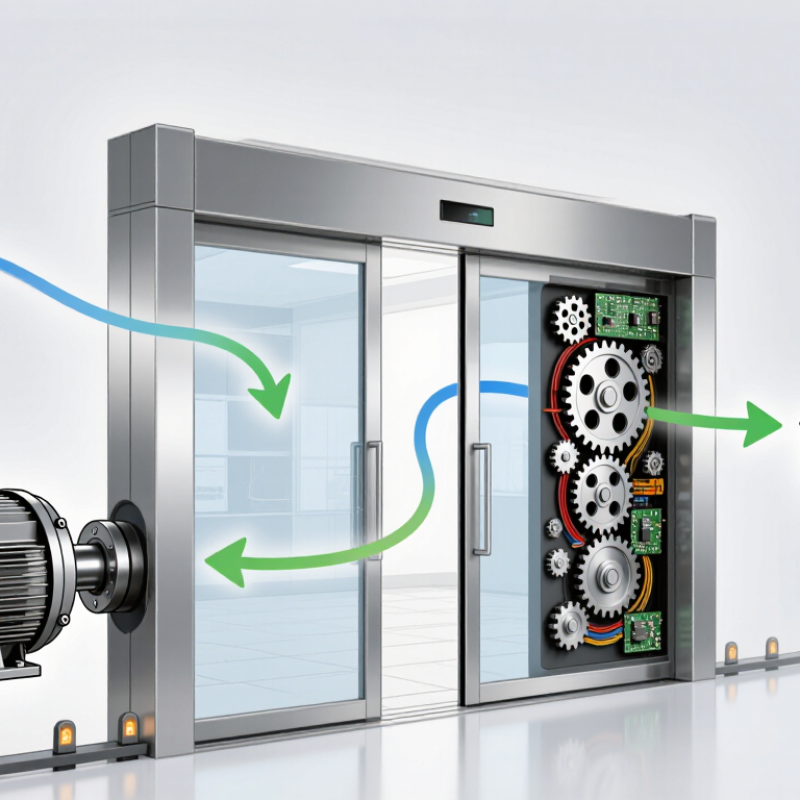
Custom motors improve door automation when their output matches the door’s real workload, not just its advertised weight. Measure the door and check its balance, hinges, rollers, and track friction. A heavy, poorly balanced door may need more starting torque than its weight suggests. That matters. Ask for torque capacity that covers startup and movement without forcing the motor to run near its limit. Load estimates are imperfect, so leave a practical margin and verify the door on site.
Speed is a separate choice. A fast motor may suit a busy entrance, but abrupt starts can increase noise and stress on gears, panels, and fittings. Match acceleration and travel speed to the door’s size and use. Then check duty requirements: how many cycles occur per hour, and how long must the motor run before cooling? A motor suited to occasional use may overheat in a high-traffic setting. Also consider braking, position control, and the site’s dust, moisture, or temperature.
Tips: Record door weight, opening time, cycles per hour, and any sticking points before selecting a motor. Test it through repeated cycles, not just one opening. Listen for strain. If the door moves unevenly, fix the mechanical cause rather than simply choosing a larger motor. Small details count.
A custom motor can be matched to a door’s weight, width, and daily operating pattern. This helps deliver smoother starts and stops instead of sudden jolts. Adjustable speed and torque can keep movement steady when a door is heavier or experiences changing resistance. Less vibration. Over time, smoother motion may reduce stress on rollers, hinges, and drive components, though results depend on correct installation and maintenance.
Precise control also helps doors respond consistently to commands. A controller can regulate acceleration, running speed, and deceleration, while position feedback can help it stop at the intended point. This matters in busy entrances, where repeated hard stops can create noise and uneven movement. Still, tighter settings are not always better. A door needs suitable force and speed for its design, and motor control does not replace properly configured safety sensors or regular inspections.
Tips: Check that the motor’s torque and speed suit the actual door load. Test opening and closing cycles after adjustments, and listen for new scraping or rattling. If movement becomes uneven, inspect the track and hardware before increasing motor force.
A door operator works through repeated starts, stops, and changing loads. A custom motor can match its torque and speed to the door’s weight, travel, and duty cycle. This reduces strain on gears and limits abrupt starts that can loosen hardware. Heat quietly wears parts. Correct sizing, suitable insulation, and effective cooling help manage it.
The U.S. Department of Energy’s 2014 United States Industrial and Commercial Motor System Market Assessment Report estimated that motor-driven systems use about 68% of U.S. manufacturing electricity. That figure is not a door-life prediction, but it shows why motor selection and efficiency matter in equipment that runs often. In practice, checking actual cycle frequency and peak load is essential; design assumptions can miss cold-weather friction or a door that has become harder to move. Fit matters. Feedback options, such as temperature or position monitoring, can also help maintenance teams spot developing issues before a failed opening interrupts operations.
Tips: Record daily cycles, door weight, and operating temperature before specifying a motor. Leave a sensible load margin, but avoid oversizing without engineering review. Inspect mounting bolts, seals, and gear noise during routine service. A tailored motor can improve reliability, but installation and maintenance still matter.
A custom motor can be matched to a door’s weight, travel speed, and daily operating cycle. The right fit helps reduce gear strain and avoid abrupt starts. Encoder feedback lets the controller detect unusual resistance and stop or reverse the door. A pressure edge or light curtain can provide added protection near closing zones. Small details matter. Sensor placement, response settings, and regular testing affect how well these safeguards work in practice. A motor alone cannot make a poorly maintained door safe.
Energy efficiency also depends on how the motor and controls work together. Variable-speed operation can ease acceleration and reduce unnecessary mechanical stress. During quiet periods, suitable controls may limit standby power without delaying the next opening. Actual energy use still varies with door size, traffic, installation, and maintenance. Measure it. One trade-off is that more sensors and control features need careful setup; incorrect settings can cause nuisance stops or missed faults. Installers should test safety responses under realistic conditions and review motor temperature, opening time, and power use over time. Those checks reveal whether the integration is delivering dependable operation, not just a smoother-looking cycle.
| Integration approach | How it supports safety | Potential energy benefit | Useful validation measures |
|---|---|---|---|
| 1. Match motor torque and speed to the door | Correct sizing helps avoid sluggish movement and excessive force. Safety still depends on the complete door system, its controls, and protective devices. | A motor selected for the actual door load can avoid unnecessary oversizing and associated operating losses. | Door mass, balance, required travel time, starting torque, and measured motor current under normal operation. |
| 2. Use controlled acceleration and deceleration | A suitable motion profile can reduce abrupt starts and stops, helping limit mechanical shock and door movement that may surprise nearby users. | Reducing unnecessary acceleration and braking can reduce wasted energy and stress on drive components. | Opening and closing time, stopping position, vibration, and current or power during each movement. |
| 3. Integrate obstruction detection and force limitation | Motor-current or torque monitoring can support obstruction response when correctly designed and tested. It should complement appropriate presence sensors and other required protective measures. | Promptly stopping or reversing an obstructed door can prevent repeated, energy-consuming attempts to close it. | Detection and response behavior across expected loads, environmental conditions, and sensor fault conditions. |
| 4. Add position feedback and accurate end limits | Encoders or limit devices can help the controller identify door position and stop travel at configured endpoints, reducing the risk of overtravel. | Accurate positioning avoids driving the motor after the door has reached its intended stop. | Endpoint repeatability, stopping distance, and correct response to a disconnected or faulty position sensor. |
| 5. Coordinate the motor with sensors and access controls | Interlocks and presence sensors can help prevent movement when a monitored zone is occupied or a safety condition is not met. The controller must be configured for the door’s use and applicable requirements. | Demand-based operation can avoid unnecessary opening cycles when no valid request is present. | Sensor coverage, interlock response, false-trigger rate, and cycle counts during representative use. |
| 6. Select a motor and drive suited to the duty cycle | A suitable thermal and mechanical rating helps the drive operate within its intended limits under the expected frequency of door cycles. | An appropriately selected motor avoids running an unsuitable unit at persistently high load; actual savings depend on the door, drive, and usage pattern. | Cycles per hour, motor temperature, operating current, and manufacturer-specified duty rating. |
| 7. Enable diagnostics and preventive maintenance | Monitoring cycle counts, faults, and abnormal current can help identify developing problems for inspection before they cause unreliable operation. | Maintaining correct alignment and mechanical condition can help prevent excess friction and avoid repeated unsuccessful movements. | Fault logs, cycle history, changes in current or travel time, and inspection records. |
Note: Safety and energy performance depend on the complete door assembly, installation, control settings, maintenance, and operating conditions. Verify the finished system against applicable local regulations and standards.
How to Select a Custom Motor for a Door Automation System
Selecting a custom motor starts with the door, not the catalogue. Record its weight, travel distance, opening speed, and daily cycle count. A heavy sectional door may need high starting torque, while a frequently used entrance needs careful thermal management. Measure the real load if possible; estimates can miss friction from worn rollers or cold weather. There is no perfect pick.
Duty cycle matters. A motor sized only for peak torque may overheat during repeated opening and closing. The U.S. Department of Energy’s Improving Motor and Drive System Performance: A Sourcebook for Industry reports that motor-driven systems use about 68% of electricity in U.S. manufacturing. That figure is not door-specific, but it shows why efficiency deserves attention. Compare efficiency under the expected operating load, not just at a favorable rated point.
Check control compatibility, braking behavior, noise, and available space. Confirm that the motor works with the system’s sensors and stopping logic, and ask for thermal and cycle-life test data. The International Energy Agency’s 2011 assessment estimated that electric motor systems account for roughly 46% of global electricity use. Efficiency matters, but so does safe, consistent movement. One detail is easy to overlook: a quiet motor can still deliver uneven motion if its speed control is poorly matched. Specify the operating conditions in writing, then review the choice after commissioning; real doors can be stubborn.
A custom motor should match the door’s load, travel speed, and operating duty.
The bars show ideal mechanical power to lift a door vertically by 2 metres in 10 seconds, calculated using P = m × g × h ÷ t. Actual motor output must be higher to account for friction, acceleration, transmission losses, and the required safety margin. When selecting a custom motor, also check torque, speed, and duty cycle.
Record the door’s weight, balance, hinge condition, roller movement, and track friction. A heavy, poorly balanced door may need extra starting torque.
Choose enough torque for startup and steady movement, with a practical load margin. Avoid sizing by advertised door weight alone. Estimates can miss friction.
Match speed and acceleration to the door’s size and daily use. Abrupt starts can add noise and stress gears, panels, and fittings.
It describes how often the motor runs and how long it needs to cool. A motor for occasional use may overheat in a busy entrance.
Note door weight, opening time, cycles per hour, and sticking points. Small details count.
Test several repeated cycles and listen for unusual strain or gear noise. One smooth opening is not enough.
Check for mechanical causes, such as track friction or worn rollers. A larger motor may hide the problem, not fix it.
Temperature or position feedback can help teams spot developing issues. Still, installation and routine maintenance matter. Fit matters.
Custom motors improve door automation by matching torque, speed, and operating duty to the door’s size, weight, and usage patterns. This tailored fit can support smoother movement, reduce strain on mechanical components, and help doors operate consistently in environments with different traffic levels. Precise motor control also allows gradual starts and stops, accurate positioning, and responsive adjustments, improving the overall user experience while limiting unnecessary wear.
So, how can custom motor solutions improve door automation? They can be designed to work effectively with sensors, controls, and safety features, helping doors respond appropriately to people and changing conditions. Efficient motor operation may also reduce wasted energy and support longer service life. When selecting a motor, consider the door’s load, required speed, daily operating cycles, control needs, installation space, and maintenance requirements. A well-matched solution can make an automated door safer, more reliable, and better suited to its specific application.

Torsion Motor