How to Choose the Best Roller Shutter Motor from China?

Time:2026-10-13 Author:Oliver
0%

Choosing a roller shutter motor from China requires more than comparing prices on a supplier page. The real question is how to choose the right roller shutter motor for your shutter size, operating frequency, safety needs, and local installation conditions. A motor that lifts a 120-kilogram industrial shutter may be unsuitable for a narrow residential window. Torque, rated duty cycle, noise, control compatibility, and emergency operation all matter.

Industry data supports this careful approach. The International Energy Agency reports that buildings consume roughly 30% of global final energy, making efficient solar and shading control increasingly important. Market analyses from Grand View Research and Mordor Intelligence also identify automation, smart-home integration, and demand for energy-saving building products as major growth drivers in the roller shutter sector. These trends influence Chinese manufacturers, but they do not guarantee equal product quality. Some factories excel at motors, while others mainly assemble components. The difference can appear in bearing life, limit-switch accuracy, and heat buildup after repeated cycles.

Look closely. Ask for rated torque charts, test records, wiring diagrams, and production photographs. Verify whether the motor suits your shutter tube, curtain weight, and control system. Independent testing, traceable components, and clear warranty terms provide stronger evidence than attractive catalog language. International standards, such as IEC motor-safety principles, can guide technical discussions, while regional certification requirements should be checked before purchase. A low quotation may reduce initial cost, yet increase installation problems and service claims later. Even experienced buyers can misjudge real duty conditions. That is why sampling, load testing, and supplier audits remain practical steps when sourcing a reliable roller shutter motor from China.
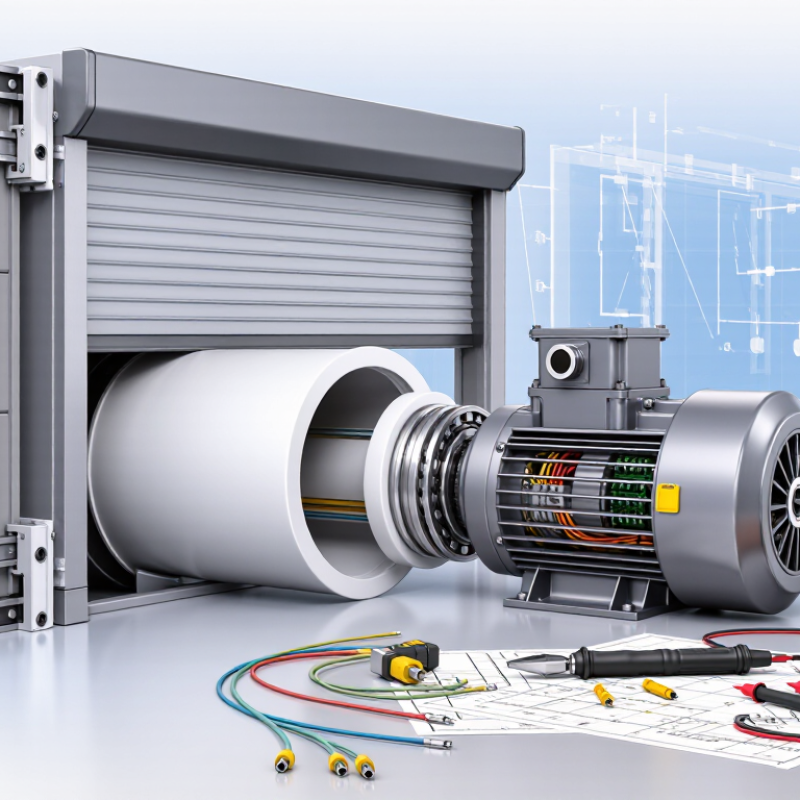
How to Choose the Best Roller Shutter Motor from China?

Understanding Roller Shutter Motor Types and Applications

How to Choose the Best Roller Shutter Motor from China?

Roller shutter motors differ by structure, torque, control method, and installation environment. Tubular motors fit inside the shutter tube, keeping the appearance clean. They suit residential windows, shopfronts, and medium-sized doors. External motors provide stronger lifting power for larger industrial shutters. Inline motors are practical where side space is limited. Solar-powered versions can support remote buildings, but battery performance may decline during long cloudy periods.

Application matters more than rated power alone. Measure curtain weight, shaft diameter, shutter height, and daily operating cycles. A motor with insufficient torque may overheat, while excessive torque can damage the curtain. The IEA’s Buildings 2023 report states that buildings consume about 30% of global final energy. Properly fitted shutters can help reduce heat transfer and improve indoor comfort. Smart control adds convenience, yet connectivity failures remain a realistic concern. Choose manual override options for critical entrances.

Tips: Ask Chinese suppliers for torque curves, duty-cycle ratings, noise data, IP protection details, and test records. Compare samples under real loads, not empty shafts. Confirm limit-switch accuracy after repeated cycles. EN 13659 and relevant local electrical standards should guide verification. I have found that a low price often hides weak accessories or unclear after-sales support. That mistake is easy to repeat. Request production photos, inspection reports, and spare-parts availability before placing a bulk order. Industry guidance from the U.S. Department of Energy also supports evaluating window attachments by climate and installation quality, not appearance alone.

Assessing Motor Specifications for Shutter Size and Weight

How to Choose the Best Roller Shutter Motor from China?

Roller shutter motor selection should begin with the curtain, not the catalogue. Measure the opening width, height, and actual curtain weight on site. Do not rely only on estimated steel thickness. A shutter weighing 180 kilograms needs different torque from a 90-kilogram curtain. Inspect the shaft diameter, tube length, guide resistance, and available mounting space. These details often decide whether operation feels smooth or strained.

Motor torque must exceed the lifting load, but excessive capacity is not automatically safer. Ask the supplier for rated torque, lifting speed, duty cycle, voltage, and thermal protection. Compare the torque curve at the required shutter speed. A motor may show impressive peak torque but weaker continuous performance. Wide shutters can create uneven winding and extra resistance. Wind exposure also matters for exterior installations. I have seen calculations fail because friction was treated as zero. That looked neat on paper. It was not reliable. Request test data, installation drawings, and clear load calculations before ordering from China.

Tips: Weigh the curtain instead of guessing. Test manual movement first. Check whether the motor can complete repeated cycles without overheating. Leave a practical safety margin, then confirm it with a qualified installer. If the shutter feels heavy by hand, a stronger motor alone may not solve the problem. Misalignment could be the real issue.

Checking Safety, Control, and Compatibility Features

How to Choose the Best Roller Shutter Motor from China?

A suitable roller shutter motor must match the shutter’s weight, size, and operating frequency. Check the rated lifting capacity, torque curve, and duty cycle before comparing prices. A motor that seems powerful may overheat during repeated commercial use. I have seen installations fail because the motor was selected by curtain width alone. That shortcut is risky.

Safety features deserve close attention. Look for thermal protection, obstacle detection, emergency manual release, and controlled stopping. Limit switches should offer precise adjustment and stable performance. Ask for factory test records, wiring diagrams, and clear installation instructions. Control compatibility matters too. Confirm whether the motor supports wall switches, remote controls, sensors, or building automation systems. Also check voltage, frequency, receiver range, and communication protocols. Small differences can stop the whole system.

Tips: Measure the shutter on site, including its actual weight and shaft diameter. Request a sample motor when possible. Test noise, stopping accuracy, and manual operation before placing a large order. Keep records of serial numbers and test results. Do not trust vague claims such as “universal compatibility.” A supplier should explain limits honestly. I would also leave some capacity margin, although excessive power can create unnecessary stress. That detail is easy to overlook.

How to Choose the Best Roller Shutter Motor from China? – Checking Safety, Control, and Compatibility Features
Evaluation Dimension Specification or Fact to Check Recommended Benchmark Why It Matters Evidence to Request from the Supplier
Applicable Safety Standards Confirm that the motor and its intended application are assessed against relevant product and machinery safety requirements. For many shutter-drive applications, check relevance of EN 60335-2-97 together with applicable general electrical safety requirements. Standards help address electrical, mechanical, thermal, and foreseeable-use hazards. Declaration of Conformity, technical file summary, applicable standards list, and current test reports.
Regulatory Documentation Verify the required conformity marking and documentation for the destination market. For the European Economic Area, request a valid EU Declaration of Conformity; for other markets, verify local requirements. A conformity mark is not a quality grade and should be supported by traceable documentation. Declaration of Conformity, product label photographs, installation instructions, and importer or manufacturer information.
Overload and Thermal Protection Check whether the motor includes an internal thermal protector and protection against excessive load or stalled operation. Automatic thermal cut-off and clearly stated reset behavior; overload protection should match the control system. Protection reduces the risk of overheating, winding damage, and unsafe operation when the shutter is obstructed. Protection circuit description, temperature rating, test procedure, and fault-reset instructions.
Obstacle Detection Determine whether the motor can detect abnormal resistance during closing and whether sensitivity is adjustable. Use a motor or controller with obstacle detection where users, children, vehicles, or valuable contents may be exposed to the moving shutter. Obstacle detection can reduce crushing and entrapment risks, but it does not replace a complete risk assessment. Detection method, closing-force test data, adjustment range, reaction time, and installation limitations.
Manual Override Check whether the shutter can be operated manually during a power failure or emergency, if required by the installation. Provide a compatible manual override or emergency release when the shutter is part of an escape, access, or critical-use route. Manual operation can preserve access when electrical control is unavailable. Override mechanism drawing, maximum shutter load, operating instructions, and compatibility list.
Rated Voltage and Frequency Match the motor to the local electrical supply and the available control equipment. Common options include 230 V AC at 50 Hz, 120 V AC at 60 Hz, and low-voltage DC versions; use only the rating shown on the nameplate. Incorrect voltage or frequency can cause overheating, poor torque, premature failure, or unsafe operation. Nameplate photograph, electrical datasheet, rated current, wiring diagram, and allowed voltage tolerance.
Motor Torque Choose torque according to curtain weight, shaft radius, friction, wind exposure, and starting requirements. Use the supplier’s load chart and include an engineering safety margin; do not select by curtain weight alone. Insufficient torque causes incomplete travel and overheating, while excessive torque can damage the curtain or guides. Torque-versus-load chart, recommended curtain area, calculation method, and maximum permitted torque.
Speed and Travel Time Compare rated output speed and the time required to open or close the actual shutter. Select a speed that meets the required operating time without exceeding the shutter’s mechanical limits. High speed may increase impact forces, noise, and wear if the curtain or control system is not designed for it. Rated revolutions per minute, measured travel-time data, soft-start or soft-stop information, and load conditions.
Limit-Switch System Check how the upper and lower travel limits are set and whether the settings remain stable after repeated cycles. Use independently adjustable upper and lower limits with clear adjustment instructions and positive end-of-travel stopping. Correct limits prevent the shutter from over-winding, over-compressing, or damaging its guides. Limit-setting procedure, adjustment range, cycle-test results, and replacement-part availability.
Duty Cycle Review the permitted operating time, rest time, cycles per hour, and maximum daily cycles. The motor’s duty rating must exceed the building’s actual usage; many tubular motors are intermittent-duty products rather than continuous-duty products. Exceeding the duty cycle can activate thermal protection and shorten motor life. Duty-cycle table, maximum cycles per hour, cooling requirements, and test conditions.
Ingress Protection Check the IP rating for the motor, control box, connectors, and any exposed accessories. IP44 may suit many protected indoor locations; higher ratings such as IP54 or IP55 may be appropriate for dust or water-splash exposure, subject to the installation design. Ingress protection helps prevent moisture and dust from reaching electrical parts. IP test information, installation orientation limits, cable-entry requirements, and environmental temperature range.
Tube and Adapter Compatibility Match the motor diameter, crown, drive adapter, tube profile, tube size, and available insertion length. Common tubular motor outer diameters include approximately 35 mm, 45 mm, and 59 mm; compatibility must be confirmed for the exact tube profile. A motor with the correct torque may still be unusable if the adapter or tube geometry is incompatible. Dimensioned drawings, tube compatibility chart, adapter samples, insertion-depth requirements, and minimum tube diameter.
Control Compatibility Identify whether the motor uses wired switching, dry contact control, radio control, or a network gateway. The control method, switching logic, neutral requirement, and interlock arrangement must match the building-control system. Incorrect wiring or simultaneous up/down commands can damage the motor and create unsafe movement. Wiring diagram, terminal definitions, interlock requirements, controller compatibility statement, and commissioning procedure.
Radio and Smart-Home Features For wireless models, verify frequency, encryption, pairing method, range, gateway requirements, and local radio regulations. Use documented regional radio compliance; do not assume that a 433 MHz, 868 MHz, or 2.4 GHz device is legal or interoperable in every country. Wireless performance and legal operating bands vary by region and building construction. Radio test report, frequency information, encryption description, gateway API or protocol details, and firmware-update policy.
Noise Level Compare sound pressure level and the test distance and conditions used for measurement. Choose a motor with a documented noise value suitable for bedrooms, offices, hotels, or other noise-sensitive areas. Noise is affected by motor design, shutter balance, mounting brackets, and building structure, not by the motor alone. Noise test data, test distance, mounting arrangement, and recommended vibration-isolation accessories.
Power Consumption Review running current, standby consumption, and any power used by external receivers or gateways. Compare both operating and standby values under the same voltage and control conditions. Lower standby consumption is valuable when many motors remain connected continuously. Rated input power, standby power, power-factor data where applicable, and measurement conditions.
Mechanical Installation Check mounting brackets, shaft alignment, end locks, curtain balance, guide-rail condition, and fixing strength. The motor should be installed only in a correctly balanced shutter system with secure supports and aligned guides. Mechanical defects can create excessive load even when the motor is correctly rated. Installation manual, bracket load rating, shaft alignment requirements, permissible tilt, and commissioning checklist.
Environmental Conditions Confirm operating temperature, humidity, corrosion exposure, altitude, and suitability for indoor or outdoor installation. Use the manufacturer’s stated operating range and select corrosion-resistant components for coastal, industrial, or high-humidity locations. Environmental stress can reduce insulation life, cause corrosion, and affect limit-switch reliability. Environmental rating, temperature range, corrosion test information, storage conditions, and cable specifications.
Testing and Quality Control Check whether every motor is tested for insulation, grounding, current, limit operation, and functional performance before shipment. Require documented 100% routine testing for safety-critical electrical and functional checks. Routine testing helps identify wiring errors, defective limit switches, and insulation problems before installation. Sample test record, inspection checklist, batch traceability method, and serial-number system.
Warranty and Spare Parts Review warranty period, exclusions, replacement motor availability, adapters, controllers, and technical support. Prefer written warranty terms with defined response times and access to compatible spare parts for the expected service life. A technically suitable motor may become costly if small replacement parts or support are unavailable. Warranty document, spare-parts list, service procedure, troubleshooting guide, and long-term availability statement.
Selection note: The final motor should be selected from the complete shutter-system calculation, not from torque or price alone. Always verify the exact motor, adapter, controller, installation method, and destination-market requirements before purchase.

Evaluating Chinese Manufacturers and Product Quality

How to Choose the Best Roller Shutter Motor from China?

China supplied about 31.6% of global manufacturing value added in 2023, according to UNIDO’s International Yearbook of Industrial Statistics 2024. This scale offers choice, but quality varies sharply between factories. Evaluate the manufacturer, not only the motor’s price. Request ISO 9001 certification, production records, and traceable batch numbers. The ISO Survey 2023 reported more than 1.26 million ISO 9001 certificates worldwide. Certification supports process control, but it does not prove reliable motor performance.

Ask for test evidence under IEC 60335-2-97 or relevant regional standards. Check rated torque, duty cycles, thermal protection, noise, emergency operation, and water resistance. A credible factory should provide load-test videos and independent laboratory reports. Inspect the gearbox closely. Clean teeth, consistent grease, and firm wiring matter. A polished sample can still hide weak gearing. I have seen inexpensive units pass a short demonstration, then overheat after repeated cycles. That result is easy to miss.

Tips: Order samples from two production batches. Test them with your actual shutter weight. Record temperature, lifting speed, and noise after 50 cycles. Ask how failed units are investigated. Also check spare-part availability and warranty response times. Do not rely on a catalogue rating alone. Some specifications look precise, yet installation conditions can expose the gaps. Recheck your assumptions before placing a large order.

How to Choose the Best Roller Shutter Motor from China?

This purchasing scorecard uses practical evaluation weights for comparing Chinese roller shutter motor suppliers. Safety and compliance receive the highest weighting, followed by durability, motor performance, environmental protection, after-sales support, and total cost. Buyers can score each supplier against these dimensions using verified test reports, samples, certifications, and warranty terms.

The percentages represent recommended evaluation priorities, not claims about any specific manufacturer or brand.

Comparing Prices, Certifications, Warranties, and After-Sales Support

How to Choose the Best Roller Shutter Motor from China?

Price should be compared by total landed cost, not factory quotation alone. A cheap motor may require costly adapters, rewiring, or replacement parts. Add freight, customs, installation, and expected maintenance. The European Commission reports that 85% of EU buildings were built before 2000, creating strong demand for efficient retrofit solutions. The International Energy Agency also reports that buildings consume about 30% of global final energy. A reliable motor can reduce unnecessary operation and improve daily comfort.

Check certifications against the destination market. Ask for complete test reports, not only printed certificates. IEC 60335-2-97 is relevant to motor-operated shutters, doors, and awnings. Verify electrical ratings, thermal protection, noise testing, and batch traceability. Warranty terms need equal attention. A practical agreement should state coverage length, excluded damage, replacement procedures, and freight responsibility. Two years sounds attractive, but vague wording weakens its value.

After-sales support often decides the real purchase cost. Request a spare-parts list, wiring diagrams, troubleshooting videos, and response-time commitments. Ask whether common components remain available for five years. A supplier promising “lifetime support” may still lack local technicians. That deserves skepticism. I would also test one sample before placing a large order. It is not perfect, because one sample cannot represent every production batch. Still, checking limit switches, manual override, noise, and repeated cycling can expose problems early.

FAQS

Which roller shutter motor type suits a residential window?

A tubular motor usually fits inside the shutter tube. It keeps the window area neat and works well for medium loads.

When should I choose an external motor?

Choose an external motor for large or heavy industrial shutters. It provides stronger lifting power and usually needs more installation space.

Are inline motors useful in narrow spaces?

Yes. Inline motors suit installations with limited side clearance. Measure the available space before ordering.

Can solar-powered motors work in remote buildings?

They can support remote locations without convenient wiring. However, battery performance may decline during long cloudy periods.

How do I select the correct motor power?

Measure curtain weight, shaft diameter, shutter height, and daily operating cycles. Rated power alone is not enough.A motor with insufficient torque may overheat. Excessive torque can damage the curtain. This is easy to overlook.

What technical information should I request from a supplier?

Request torque curves, duty-cycle ratings, noise data, IP protection details, and test records. Ask for production photos and inspection reports.Compare samples under real loads. Empty-shaft testing can hide weaknesses.

How should I compare motor prices?

Compare the total landed cost, including freight, customs, installation, adapters, wiring, and maintenance. A low quotation may not remain low.Cheap accessories can become expensive later. I have repeated this mistake before.

Which certifications and tests should I verify?

Check relevant destination-market requirements and electrical standards. Request complete test reports, thermal protection details, noise results, and batch traceability.A printed certificate alone proves little. Verify whether the documents match the supplied model.

What should a useful warranty agreement include?

It should state coverage length, exclusions, replacement procedures, and freight responsibility. A two-year warranty is weak when the wording remains vague.Ask who pays for failed parts. Ask how quickly replacements ship.

How can I assess after-sales support?

Request spare-parts lists, wiring diagrams, troubleshooting videos, and response-time commitments. Confirm whether common components remain available for five years.“Lifetime support” may sound impressive. It may lack local technicians.

Should I test one sample before placing a bulk order?

Yes, test limit switches, manual override, noise, and repeated cycling. One sample cannot represent every production batch, but it can expose early problems.Keep critical entrances manually operable. Connectivity failures remain possible.

Conclusion

Choosing the best roller shutter motor from China requires more than comparing prices. Start by identifying the motor type that matches the shutter’s application, such as residential, commercial, industrial, or high-frequency use. To understand how to choose the right roller shutter motor, evaluate the shutter’s size, weight, operating frequency, and installation environment. The motor’s lifting capacity, speed, torque, noise level, and power requirements should all be suitable for the actual shutter system.

Safety, control, and compatibility are also essential. Look for reliable limit settings, overload protection, emergency operation, remote or wall-switch control, and compatibility with existing automation systems. When evaluating Chinese manufacturers, review their production capabilities, quality-control procedures, testing standards, certifications, and customization options. Finally, compare total value rather than the lowest price alone, considering warranty terms, spare-part availability, delivery reliability, technical assistance, and after-sales support. A well-matched motor from a dependable supplier can provide safe, smooth, and long-term shutter performance.

Oliver

Oliver

Oliver is a seasoned marketing professional with a wealth of expertise in driving brand awareness and engagement. With a deep understanding of our company's product offerings, he consistently delivers high-quality content that enriches our professional blog. His insights not only shed light on......